

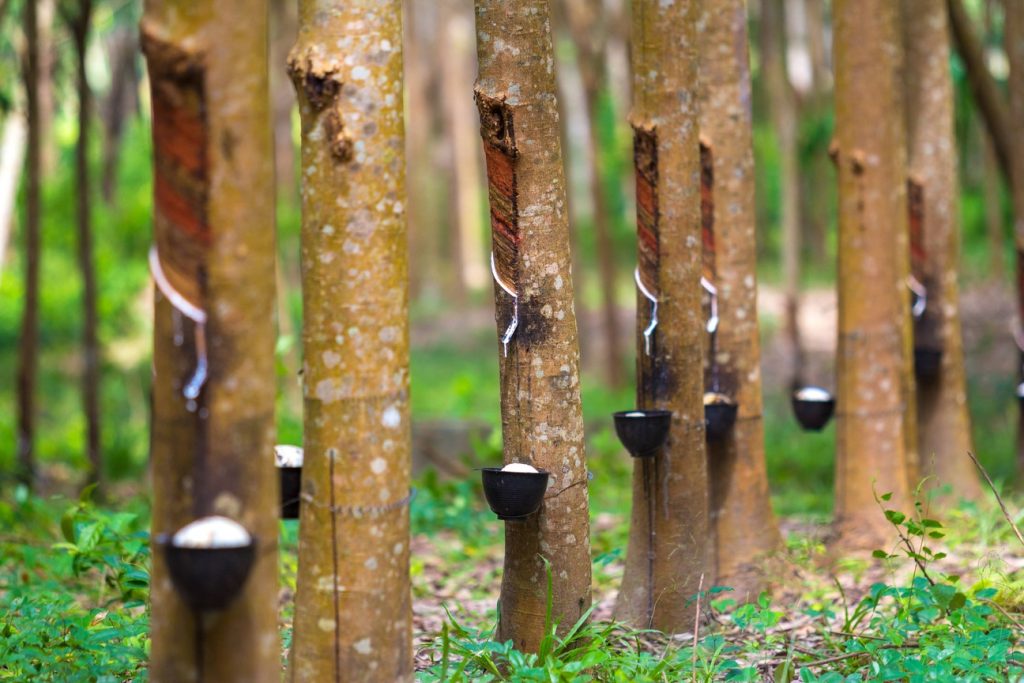
Natural rubber cultivation represents a crucial industry in the global economy, not only for its indispensable role in manufacturing numerous products, from tires to medical equipment, but also for its significant positive impact on the environment and forest management. Below, we will explore how natural rubber cultivation contributes to environmental sustainability and the well-being of forest ecosystems.
Biodiversity Conservation
When managed sustainably, natural rubber plantations can help preserve biodiversity. These plantations are often established in areas where alternative land uses could be much more detrimental to local ecosystems, such as extensive livestock farming or monoculture agriculture. By preserving a forest canopy and allowing some diversity in the underlying vegetation, natural rubber plantations can host a variety of flora and fauna species, acting as ecological corridors that facilitate the movement and genetic diversity of wildlife.
Carbon Capture
Natural rubber trees play a crucial role in mitigating climate change through carbon capture. As they grow, they absorb carbon dioxide (CO2) from the atmosphere, storing carbon in their wood and releasing oxygen. This process helps reduce the concentration of greenhouse gases in the atmosphere. Over their lifespan, which can exceed 30 years before their yield declines, a rubber tree can capture a significant amount of carbon, thus contributing to the fight against climate change.
Soil Protection
Natural rubber cultivation also plays an important role in soil protection. The root system of rubber trees helps prevent soil erosion, especially in areas prone to heavy rainfall, by maintaining soil structure and reducing water runoff. Additionally, vegetative cover in rubber plantations can improve soil quality through the decomposition of organic material such as fallen leaves and branches, enriching the soil with essential nutrients for fertility.
Economic and Social Sustainability
Beyond environmental benefits, natural rubber cultivation offers significant economic and social advantages. It provides sustainable livelihoods for millions of smallholder farmers and workers in developing countries, where economic opportunities may be limited. Through sustainable farming practices, these plantations can generate stable incomes, improving the living conditions of rural communities and fostering local economic development.
Towards a Sustainable Future
To maximize the forest and environmental benefits of natural rubber cultivation, it is essential to adopt sustainable farming practices. This includes proper plantation management to avoid deforestation, biodiversity conservation through the protection of surrounding natural areas, and efficient use of water and chemical resources to minimize environmental impact.
The natural rubber industry is in a unique position to lead by example in sustainable production. By committing to responsible agricultural practices and investing in technologies that reduce environmental impact, natural rubber cultivation can continue to be a vital source of industrial products while significantly contributing to environmental conservation and the promotion of healthy forest ecosystems.
As we move towards a more sustainable future, the role of natural rubber in environmental protection and the promotion of sustainable forest practices will become increasingly crucial. Its ability to harmonize economic needs with environmental conservation offers a valuable model for others to follow.
Created by: Diego Fernando Marin Ardila
